



To choose a vase, start with the flowers you actually buy, not the vase you like on the shelf. Measure the stems, then pick a vase roughly a third to half their height. Narrow necks hold a few stems upright. Wide mouths need a full bunch or a frog to keep things in place. Low bowls are for one or two stems placed on purpose. Get those three things right and almost anything you bring home will look intended.
That is most of the advice. The rest is about matching shape to habit, because a vase that suits your Saturday market bunch will be wrong for the branches you drag in from the yard in October. We just took in a new group of vases from Toronto ceramicist Katherine Holland, so we used them to work through the question properly.
In this guide
- What size vase do I need?
- Does the shape of the neck matter?
- What vase works for a cheap grocery store bouquet?
- What do I put branches in?
- Is a low bowl a vase?
- Frequently asked questions
What size vase do I need?
A workable rule of thumb from florists: the visible arrangement should stand about one and a half to two times the height of the vase. Put another way, the vase is a third to half of the total height. Too short and the flowers flop over the rim. Too tall and the blooms sit in the neck like they are hiding.
So measure before you buy. Supermarket bunches often arrive with stems around 40 to 50 cm. Trim them a few centimetres for fresh water uptake and you are looking at a vase somewhere between 15 and 25 cm tall. Branches and long garden stems need something taller and heavier. A few short stems from a windowsill herb or a single dahlia want something small, or something low.
Weight matters as much as height. A tall arrangement in a light vase tips. Ceramic helps here, which is one reason we reach for a heavy clay vase for anything tall.

Does the shape of the neck matter?
More than anything else. The opening decides how the stems behave once they are in the water.
- Narrow neck: holds stems upright and close together. Good for three to seven stems, and forgiving if you are not a confident arranger, because the vase does the arranging for you.
- Tapered or flared mouth: lets stems fall outward into a loose fan. Better for a full bunch with some movement to it.
- Wide, open mouth: needs either a lot of stems packed in or something underneath to hold them, like a flower frog or a ball of chicken wire. Without one, a few stems will slump to the sides.
- Rounded body, narrowed opening: the most forgiving shape there is. Stems lean against the rim and the belly holds plenty of water.
Katherine's Balloon Vase is a good example of that last shape. It is compact, with a rounded, full-bodied silhouette and a gently narrowed opening, finished in her warm, speckled Plover glaze. Two or three stems from the corner store look deliberate in it.

Katherine Holland / Toronto
Balloon Vase
Compact and round with a narrowed opening. The easy answer for a few short stems.
$240 CAD
Shop now
What vase works for a cheap grocery store bouquet?
A tapered vase in the middle height range, around the 20 cm mark. Grocery bunches are usually mixed, a little uneven, and padded with filler. A taper gathers them at the neck and lets the tops spread, which hides the filler and makes the whole thing look less like it came in plastic.
The Sandpiper Vase was made for exactly this. Katherine's own description says it suits "thoughtful stems or that $7 grocery store bouquet you swore you'd only get once," and it is watertight, which is the one thing you should always check on a handmade ceramic vase. Some studio pieces are glazed for looks on the outside only and will slowly weep water into your table. Ask, or check the listing.

Katherine Holland / Toronto
Sandpiper Vase
Tapered, watertight and speckled like a sandpiper's egg. Built for the everyday bunch.
$340 CAD
Shop now
If you would rather go clear, glass shows the stems and the water, which suits a single variety cut short. The Riban Vase ($90 CAD) is handcrafted glass with lines worked into the body, inspired by old-fashioned sugar sweets. Change the water more often with glass. Everyone can see it.

What do I put branches in?
Something tall, heavy and with a fairly wide opening, because branches are top-heavy and their stems are thick. This is the season for it: bare branches, dried grasses and a few turning leaves will last weeks in a big vase, and they need almost no maintenance beyond topping up the water.
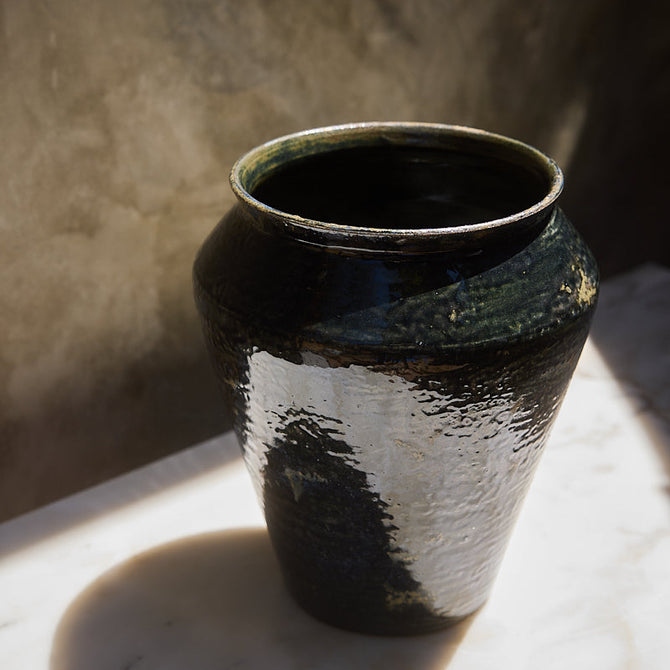
The Rhea Vase is the biggest piece in this group. It is tall and classically proportioned, in a saturated cobalt blue, with two rounded handles at the shoulders and throwing lines left visible on the surface. Its description is plain about what it is for: enough height for branches and larger arrangements. It also stands on its own when there is nothing in it, which matters for a vase this size, because there will be weeks when there is nothing in it.


Is a low bowl a vase?
It is if you want it to be, and it is the most underrated option on this list. A low bowl suits the way a lot of people actually bring flowers home: one stem that snapped short, three nasturtiums, a single peony that is too heavy for its neck. Float a bloom, or use a small pin frog (a kenzan, in ikebana) to stand a couple of stems at an angle.
The Plover Ikebana Bowl was designed with flower arranging in mind. It is small and low, speckled and sandy outside, with a deep plum-brown glazed interior that makes a single pale flower look very good. When nothing is blooming, it is a small decorative bowl. Katherine is cheerful about this kind of second life. "Don't have the time or desire to put in a floral frog, or some flowers? That's a bowl for oranges now," she told us in our conversation with her this summer.

Katherine Holland / Toronto
Plover Ikebana Bowl
Low and open, for a few stems placed on purpose. Or oranges.
$180 CAD
Shop now
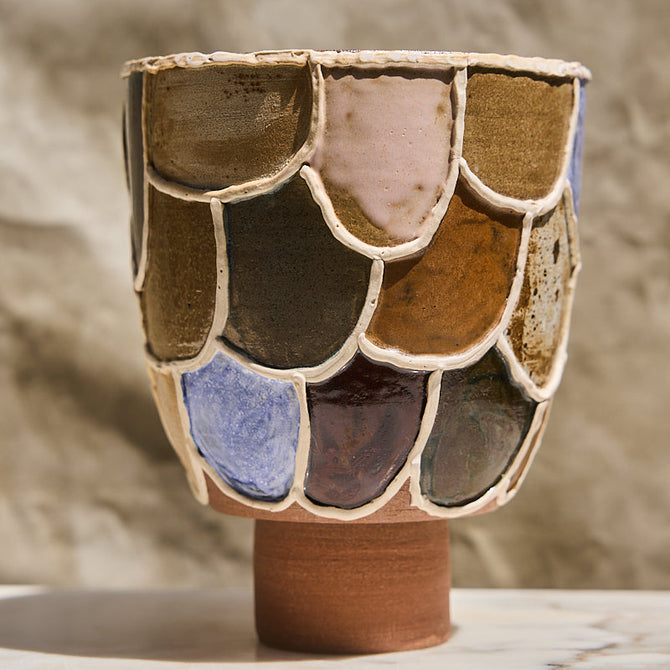
Somewhere between a bowl and a vase is the pedestal form. The Tall Crater Vase No3 ($610 CAD) is wheel-thrown, with a volcanic crater glaze outside and a cracked-ice glaze inside, and it is suited to ikebana-inspired arrangements. Raising a small arrangement off the table changes it from a centrepiece into an object.

Frequently asked questions
How tall should a vase be compared to the flowers?
Aim for a vase about a third to half the total height of the arrangement, so the flowers stand roughly one and a half to two times taller than the vase. Trim stems to fit the vase, not the other way around.
Are handmade ceramic vases watertight?
Not always. Some studio pieces are decorative and glazed only on the outside. The Sandpiper Vase in this guide is described as watertight on its product page. If a listing does not say, ask before you fill it.
What colour vase goes with everything?
Speckled neutrals, cream, sand and brown, are the most forgiving with mixed flowers. Strong colours like cobalt work best with branches, greenery or a single colour of bloom.
How do I keep stems standing in a wide vase?
Use a flower frog, a ball of chicken wire, or a grid of clear tape across the mouth. Or add more stems until they hold each other up.
Shop Katherine Holland
We carry a wide range of Katherine Holland's work, from tall vases to low bowls, at 2090 Dundas Street West in Roncesvalles and online. Every piece is one of a kind. See the full Katherine Holland collection, then bring the flowers in and check the fit.


