


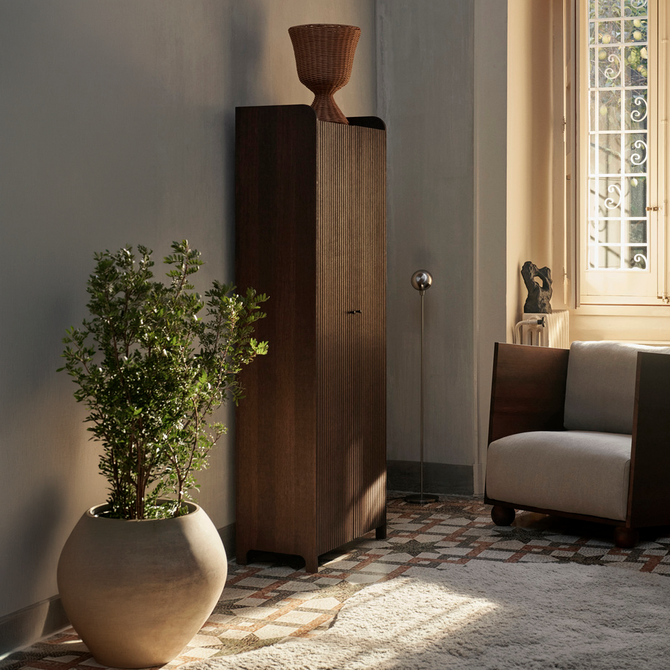

A room that looks precious is a room where the objects are performing. Everything is placed. Nothing has been moved since it arrived. The candle has never been lit. The basket has nothing in it. The glass is on a shelf. This is the failure mode people are afraid of when they start buying handmade things, and it is worth addressing directly: it has nothing to do with the objects and everything to do with how you live with them. The five principles below are how you avoid it.
In this guide
- Use things. Do not display them.
- Let one piece do the work instead of many
- Contrast is how handmade reads well
- Scent is the easiest room, with no wrong answers
- Good hardware earns its place by being invisible
- Frequently asked questions

Use things. Do not display them.
The single fastest way to make a home look like a design shop is to treat your objects like inventory. A glass on a shelf is a specimen. A glass on a table with a fingerprint on it is part of a home.
This sounds obvious until you buy something expensive and beautiful and your instinct is to protect it. Resist that instinct. A La Soufflerie glass was blown to be used. The Alien Glass earns its form every time someone picks it up and uses it for water or wine. The slightly irregular surface, the weight in the hand, the particular way the applied side forms change how you hold it. None of that is available to someone who never touches it.
Use the good glasses every Tuesday. Burn the good candle. Put the basket somewhere it gets moved around. The patina of use on a handmade object is not damage. It is what the object is for.

La Soufflerie / Paris
Alien Glass
Hand-blown from recycled glass in Paris. Applied side forms, compact and sculptural. For everyday use. It is not a shelf object.
$55 CADShop Now →
Let one piece do the work instead of many
The instinct when building a collection is to add. More objects, more variety, more coverage. The result is usually a room that reads as busy, where individual pieces cancel each other out rather than holding attention.
A single piece with scale and presence does more for a room than five smaller objects arranged together. This is especially true of baskets and textiles, where the organic form and material do a lot of work at the right size. A Yanomami Wii Basket with Graphism on a side table or a low shelf reads immediately: the form, the pattern, the material, the knowledge that it was woven by hand by Yanomami artisans in the Brazilian Amazon. That story is in the object and it does not need company to tell it.
If you are starting to introduce handmade pieces into a room, start with one that has presence. Add slowly. Editing is harder than buying.

Yanomami Artisans / Brazilian Amazon / One of a Kind
Yanomami Wii Basket with Graphism
Hand-woven by Yanomami artisans in the Brazilian Amazon using buriti palm. The graphism pattern is specific to this weaver's hand. One piece, not restocked.
$198 CADShop Now →
Contrast is how handmade reads well
Handmade objects do not require handmade surroundings. They read better in rooms that are not entirely composed of them. A La Soufflerie glass on a table with IKEA glasses is still a La Soufflerie glass. The slight irregularity in the form, the weight, the particular texture of the recycled glass: all of it reads more clearly against something uniform than it would against another handmade piece.
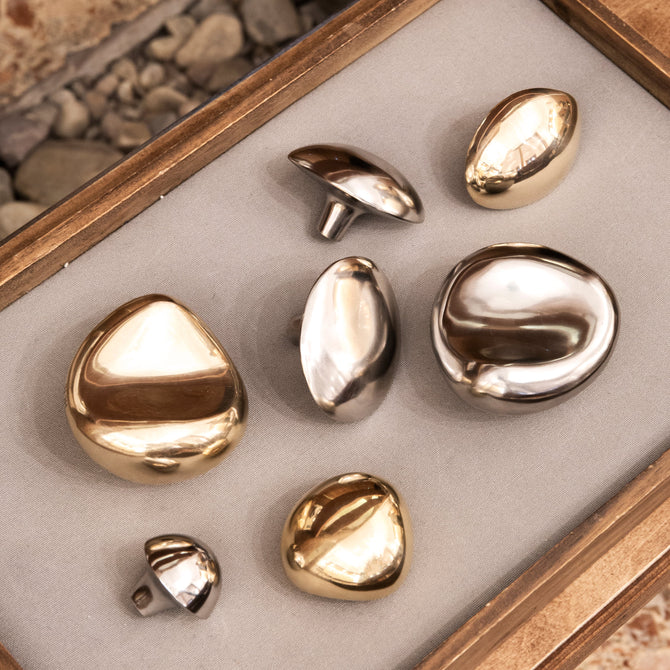
The same applies to furniture, cabinetry, and surfaces. A CERCLE knob on a standard flat-front IKEA cabinet is not incongruous. It is precisely the right context: the handmade detail registers against the machine-made ground in a way that makes both things clearer. You do not need to renovate your kitchen to justify a good knob.
The worry that handmade objects will look out of place in a modern or minimal home is usually backwards. They look most at home there.
Scent is the easiest room, with no wrong answers
Of all the categories of home goods, candles and scent are the most forgiving to style. A candle does not need to match your furniture, your colour palette, or your other objects. It burns, it scents the room, and when it is done it is done. There is no arrangement to maintain.
The one thing worth caring about in a candle is what it is made of and what it smells like. Flamingo Estate makes their candles from ingredients sourced through their Los Angeles garden: the Adriatic Muscatel Sage opens with clary sage and silver thyme, herbal and coastal, the kind of scent that changes the quality of air in a room rather than adding a smell to it. Daiyo's Rippoh Candle Spike is a different object entirely: a warosoku candle in a hand-shaped ceramic and iron holder, the candle made from sumac wax in Takashima. You do not need to choose between them. They have nothing to compete over.

Flamingo Estate / Los Angeles
Adriatic Muscatel Sage Candle
Herbaceous and coastal. Notes of clary sage, sage brush, and silver thyme. Sourced from the Flamingo Estate garden in Los Angeles. Burns clean.
$89 CADShop Now →

Daiyo / Takashima, Japan
Rippoh Candle Spike
A hand-shaped ceramic and cast iron candle holder for traditional warosoku candles. Made in Takashima, Japan. The object and the candle are both worth having.
$36 CADShop Now →
Good hardware earns its place by being invisible
The paradox of good cabinet hardware is that it does its best work when nobody mentions it. You walk into a kitchen where the knobs are CERCLE and you feel that the kitchen is well-considered. You do not think about the knobs specifically. You register the intention.
This is different from decorative hardware that announces itself. The CERCLE series is resolved geometry: a sphere, a half-sphere, an arc. Nothing is added to the form that is not structural. The result is hardware that recedes into function while remaining clearly distinct from the builder-grade alternative. It makes the space feel considered without performing.
This is the quietest kind of handmade object: one that lives in your home for years and earns its place not by being noticed, but by changing how the space feels to people who cannot say exactly why.

Maha Alavi / Toronto
CERCLE Knob Small
Cast in solid bronze or brass, hand-finished in Toronto. 11 finishes. The hardware that changes how a kitchen feels without anyone being able to say why.
From $65 CADShop Now →
For more on what any of these pieces actually cost and why, we covered the question directly: Why Handmade Home Goods Cost More, and Why That Is Actually the Point.
Frequently asked questions
How do you style handmade home goods?
Use them. The most common mistake is treating handmade objects as decorative specimens rather than functional things. A handmade glass gets used. A handmade candle gets lit. A handmade basket gets filled with things. Objects that are in use do not look precious. Objects that are arranged do.
How do you mix handmade and modern furniture?
Directly and without apology. Handmade objects do not require handmade surroundings. A La Soufflerie glass on a table with mass-produced glasses reads clearly as the better object. The contrast makes it more visible, not less. A CERCLE knob on a flat-front IKEA cabinet is not a mismatch. It is an upgrade. Contrast is the mechanism, not the problem.
How many handmade pieces are too many in one room?
There is no fixed number, but the failure mode is density: too many small handmade objects arranged together, each competing for attention, all losing. One piece with scale and presence does more than five smaller ones grouped on a shelf. Build slowly, edit often, and favour things you actually use over things that look correct.
Does handmade decor work in a minimalist home?
Better than almost anywhere else. A minimal room gives a single well-made object the space to be itself. The form, material, and variation of a handmade piece are most legible when they are not competing with other objects. Minimal rooms are not made emptier by a good handmade piece. They are completed by one.
What is the easiest handmade piece to start with?
A candle or a glass. Both are low-cost relative to the rest of the category, both are used daily, and both demonstrate the difference between handmade and mass-produced in immediate, tactile ways. A Daiyo warosoku candle at $32 or a La Soufflerie glass at $45 are both starting points that do not require a design decision, just a preference for using something well-made.
Shop Mararamiro
Handmade, one-of-a-kind, and design-led home goods. Named makers, traceable process. In Roncesvalles and online.
Shop the Collection →In-store at 2090 Dundas Street West, Toronto. Open Wednesday through Sunday.


