


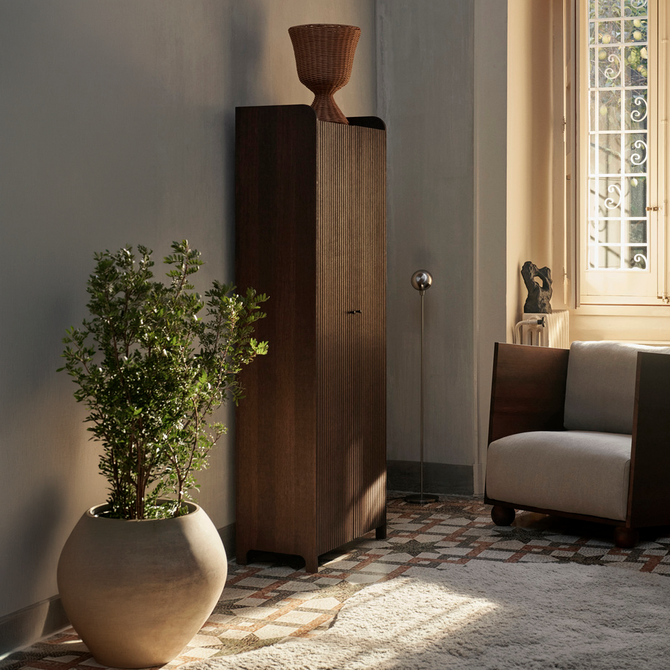

Some spaces are built. Others are entered.
Lune 1860 belongs to the latter — a restored historic estate in Goderich, Ontario that feels less like a destination and more like a world you step into, where history, design, and human connection quietly coexist. Recently named a 2025 Top Wedding Venue in Canada and a recipient of a 2025 International Design Award (International Design Awards), Lune has become a quietly influential place for those drawn to atmosphere, restraint, and the beauty of things that evolve.
As Creative Director and co-founder, Lisa Mok has shaped Lune into a layered, living environment: part gallery, part home, part dream.
In this conversation, Lisa reflects on the origins of Lune, her approach to preservation and collaboration, and the deeply human observations that guide her design philosophy. From embracing patina and imperfection to reimagining everyday objects as vessels for meaning, she shares how spaces can hold memory, invite presence, and bring people closer, simply by being thoughtfully made.

Tanya: Lune 1860 feels more like a world than a place: part gallery, part home, part dream. What story did you want it to tell when you first imagined it, and how has that story evolved?
Lisa: From the beginning, my husband and I have felt that Lune was something we were stepping into rather than building. We imagined it as a world people could wander through and feel a little changed by. Part gallery, where every object and element has a place; part home, where people feel held; and part dream, where things don’t have to make perfect sense to feel meaningful.
The story we wanted it to tell was about slowing down and remembering how to notice the little moments again. We hoped it would be a place that could spark inner quiet and curiosity at the same time.
Over time, the story has shifted in ways we didn’t plan for. Lune has started to reflect the people who move through it and the conversations that happen inside it. It feels less like a vision we created and more like a shared space that keeps gathering new layers. The dream is still there, but now it feels like something we experience alongside others rather than something we’re trying to direct on our own.
{"layout":"grid","aspectRatio":"3 / 4","imagesSelected":[{"altText":"","mimeType":"jpeg","title":"Lune186010_c93dffeb-6f94-42e1-a3f2-fd173695af74.jpg","url":"https://cdn.shopify.com/s/files/1/0625/9215/5900/files/Lune186010_c93dffeb-6f94-42e1-a3f2-fd173695af74.jpg?v=1767898548","height":1350,"width":1080,"id":"gid://shopify/MediaImage/38302366695676","size":125757,"createdAt":"2026-01-08T18:55:47Z"},{"altText":"","mimeType":"jpeg","title":"Lune18609_0c7f1a26-c645-40fe-9b6b-bcb62e7b82de.jpg","url":"https://cdn.shopify.com/s/files/1/0625/9215/5900/files/Lune18609_0c7f1a26-c645-40fe-9b6b-bcb62e7b82de.jpg?v=1767898548","height":1350,"width":1080,"id":"gid://shopify/MediaImage/38302366630140","size":97982,"createdAt":"2026-01-08T18:55:47Z"},{"altText":"","mimeType":"jpeg","title":"Lune18603_7bda599d-e107-4e33-afd6-77bbd22344b3.jpg","url":"https://cdn.shopify.com/s/files/1/0625/9215/5900/files/Lune18603_7bda599d-e107-4e33-afd6-77bbd22344b3.jpg?v=1767898548","height":1350,"width":1080,"id":"gid://shopify/MediaImage/38302366597372","size":76983,"createdAt":"2026-01-08T18:55:47Z"}],"isShowCaption":false,"imagesInARow":3,"device":"desktop","imagesInARowMobile":2,"caption":"","isAutoPlay":false,"hideButtonAction":false,"captionAlign":"center","hidden":false,"locked":false,"blockName":"Image gallery","cssContent":"","componentId":"undefined"}


Tanya: Lune’s interiors blend the soul of a 19th-century estate with a modern sensibility. How do you decide what to preserve from the original space and where to introduce something new?
Lisa: When we arrived at Lune, we quickly realized that very little of the original 19th-century interior remained. Aside from the Italian marble fireplace mantels, most of the home had been renovated many times over the years. So the question of what to preserve became less about specific original features and more about preserving a feeling. For us, it was about honouring the sense of a home that had held many lives and would continue to hold many more.
That understanding shaped our entire design approach. Rather than trying to recreate the past, we focused on creating a space that could carry history forward. The materials we chose were intentionally honest and responsive. The brass door handles were selected to show fingerprints over time, and the kitchen island for how it will slowly develop a patina with every touch. In that way, the house becomes a living guest book. People leave their mark simply by being here, just as generations did before us.
Deciding where to introduce something new always comes down to whether it deepens that sense of continuity. If a material or detail helps the home tell a fuller story, one that acknowledges its age while embracing the lives unfolding inside it, then it belongs. Our role has been to create harmony between the remnants of the past and the traces of the present, allowing Lune to keep evolving while still honouring all those it has quietly held over nearly two centuries.
{"layout":"grid","aspectRatio":"3 / 4","imagesSelected":[{"altText":"","mimeType":"webp","title":"Lune186012.webp","url":"https://cdn.shopify.com/s/files/1/0625/9215/5900/files/Lune186012.webp?v=1767670336","height":1600,"width":1067,"id":"gid://shopify/MediaImage/38286011367676","size":110326,"createdAt":"2026-01-06T03:32:14Z"},{"altText":"","mimeType":"webp","title":"Lune186013.webp","url":"https://cdn.shopify.com/s/files/1/0625/9215/5900/files/Lune186013.webp?v=1767670335","height":1080,"width":720,"id":"gid://shopify/MediaImage/38286011334908","size":87954,"createdAt":"2026-01-06T03:32:14Z"}],"isShowCaption":false,"imagesInARow":2,"device":"desktop","imagesInARowMobile":2,"caption":"","isAutoPlay":false,"hideButtonAction":false,"captionAlign":"center","hidden":false,"locked":false,"blockName":"Image gallery","cssContent":"","componentId":"undefined"}


Tanya: Collaboration is such a defining part of Lune, from artists and makers to chefs and designers. What draws you to a creative partnership, and how do you approach building those relationships?
Lisa: Collaboration is essential to Lune because it gives us the chance to keep learning. We are drawn to people who see the world differently from us, and who approach familiar materials or ideas in ways that feel unexpected. When we collaborate, we’re really inviting ourselves into someone else’s world. We want to understand how they think, how they interpret texture, form, light, or flavour, and how they find meaning in the materials they work with. It becomes a way for us to see through their eyes, rather than relying only on our own perspective.
Our approach to building those relationships is rooted in curiosity. We try to enter each partnership with the mindset of students. We listen first. We observe how they move, what they notice, what they care about. Instead of directing, we create room for their instincts to lead. When a collaboration works, it’s because everyone feels free to explore without pressure.
What excites us most is how these partnerships grow Lune in ways we could never create alone. Floral designers bring a sensitivity to movement and emotion. Chefs show how flavour can tell a story and foster connection. Artists and makers open up new possibilities in form and material. Each leaves an imprint on the house, creating a layered, living environment. Collaborating in this way stretches our imagination and allows Lune to keep evolving through many hands and perspectives.
{"layout":"grid","aspectRatio":"3 / 4","imagesSelected":[{"altText":"","mimeType":"webp","title":"MJH_0284.webp","url":"https://cdn.shopify.com/s/files/1/0625/9215/5900/files/MJH_0284.webp?v=1767671615","height":2850,"width":1900,"id":"gid://shopify/MediaImage/38286053671164","size":368764,"createdAt":"2026-01-06T03:53:33Z"},{"altText":"","mimeType":"webp","title":"MJH_0725.webp","url":"https://cdn.shopify.com/s/files/1/0625/9215/5900/files/MJH_0725.webp?v=1767671615","height":1410,"width":940,"id":"gid://shopify/MediaImage/38286053638396","size":97510,"createdAt":"2026-01-06T03:53:33Z"},{"altText":"","mimeType":"webp","title":"MJH_0610.webp","url":"https://cdn.shopify.com/s/files/1/0625/9215/5900/files/MJH_0610.webp?v=1767898596","height":2850,"width":1900,"id":"gid://shopify/MediaImage/38302369120508","size":1017190,"createdAt":"2026-01-08T18:56:34Z"}],"isShowCaption":false,"imagesInARow":3,"device":"desktop","imagesInARowMobile":2,"caption":"","isAutoPlay":false,"hideButtonAction":false,"captionAlign":"center","hidden":false,"locked":false,"blockName":"Image gallery","cssContent":"","componentId":"undefined"}


Tanya: As Creative Director, you’ve turned Lune into a place that invites connection through design, food, and storytelling. What do you hope visitors take away from the experience of being there?
Lisa: What I hope people take away from Lune is a feeling rather than a specific moment. I want visitors to slow down, to notice small details again, and to feel a sense of connection that happens naturally when design, food, and the meaning behind each gathering come together. Lune is not about perfection. It is about creating an atmosphere where people can soften a little and be present with themselves and with others. It is also a place where anyone can create freely. A canvas where people are invited to design, imagine, and express themselves without needing to justify their vision.
I also hope that people feel a sense of being genuinely welcomed. Whether it is through a meal shared at a long table, a conversation unfolding beside the fire, or simply the way light moves across a room, I want the space to feel generous. There is something grounding about being in a place that holds history, beauty, and care all at once. And it is an honour to be trusted by guests to host some of the most significant moments in their lives. Weddings, family dinners, the connections made around a table or in a quiet corner of the house. To be able to offer a canvas for these moments is something I never take for granted.
More than anything, I hope visitors leave with a sense of belonging. Lune is a home that has held many lives over nearly two centuries, and it continues to evolve through the people who spend time here. If someone walks away feeling even a small spark of connection, creativity, or calm, then the experience has done what it was meant to do.

Tanya: What first shaped the way you see design, and what’s inspiring you most right now? Was there a place, person, or moment that felt formative, or something - a material, artist, or movement - that’s currently sparking your curiosity?
Lisa: My way of seeing design started with a love of problem-solving. I have always been drawn to the moments when design quietly makes something work better, when it helps people move together more naturally, or when a space suddenly feels intuitive because everything has a purpose. I love how design can unify, define, and celebrate, but also create a bit of chaos in the best way. A little unpredictability keeps a space alive. It invites curiosity and keeps people engaged.
What shaped me most were the places and moments where I noticed this happening. I remember watching how a thoughtfully placed table could change the flow of a conversation, or how the layout of a room could either include someone or leave them standing on the margins. Those small observations taught me that design is never just about what something looks like. It is about what it makes possible.
I am inspired by life itself. Friends, coworkers, people I pass on the street, strangers navigating through the city. Life is fascinating, and I pay attention to the smallest human moments because they reveal so much about how people move through the world and what they want to experience.
Right now, I am especially inspired by the idea of taking an everyday object and recontextualizing it. A tablecloth, a tie, an apron. Simple things that carry memory and function, yet have the potential to become something entirely new when seen through a different lens. There is more to tell here soon, but this exploration is opening up a new direction for me.
What sparks my curiosity most is the idea of design as a connector. How a space can help people feel grounded. How an object can encourage generosity. How thoughtful choices can create harmony between people, place, and purpose. That is where my eye continues to go.
{"layout":"grid","aspectRatio":"3 / 4","imagesSelected":[{"altText":"","mimeType":"jpeg","title":"Lune186021.jpg","url":"https://cdn.shopify.com/s/files/1/0625/9215/5900/files/Lune186021.jpg?v=1767672772","height":1440,"width":1080,"id":"gid://shopify/MediaImage/38286104330492","size":98284,"createdAt":"2026-01-06T04:12:51Z"},{"altText":"","mimeType":"jpeg","title":"Lune186020.jpg","url":"https://cdn.shopify.com/s/files/1/0625/9215/5900/files/Lune186020.jpg?v=1767672772","height":1440,"width":1080,"id":"gid://shopify/MediaImage/38286104297724","size":88244,"createdAt":"2026-01-06T04:12:51Z"},{"altText":"","mimeType":"jpeg","title":"Lune186019.jpg","url":"https://cdn.shopify.com/s/files/1/0625/9215/5900/files/Lune186019.jpg?v=1767672171","height":1440,"width":1080,"id":"gid://shopify/MediaImage/38286059831548","size":86083,"createdAt":"2026-01-06T04:02:50Z"}],"isShowCaption":true,"imagesInARow":3,"device":"desktop","imagesInARowMobile":2,"caption":"Le Petit Tablier Collection designed by Lune","isAutoPlay":false,"hideButtonAction":false,"captionAlign":"center","hidden":false,"locked":false,"blockName":"Image gallery","cssContent":"","componentId":"undefined"}


Le Petit Tablier Collection designed by Lune
Tanya: Design can be deeply personal, especially when it’s rooted in place. What does “home” mean to you right now?
Lisa: Home has changed meaning for me recently. I split my time between the city and the countryside, and because of that, home feels less tied to a specific place. Right now, it really comes down to the people in my life. I have taken on work in the city and do not get to see my husband as much as I used to, so home has become wherever we are together. Even if it is brief, those moments make everything feel settled.
The spaces around me still influence how I think and create, but the idea of home has become much more about connection and the people who make you feel like yourself.
Tanya: Can you share a daily ritual, habit, or moment that helps you feel grounded and creatively recharged?
Lisa: Most of my ideas come from the drive between the city and the countryside. It is the only time I am completely unreachable, and that quiet creates space for unexpected thinking. Some of my weirdest and most interesting ideas have shown up on those drives.
I also pull a lot of inspiration from content. Social media, when used intentionally, feels like a constantly evolving mood board. I am not using it to compare or to chase trends. After years in marketing, I know exactly where the fantasy ends. What interests me is how people interpret materials, how they build worlds, and how they communicate ideas visually. It keeps me curious and connected to what is happening across design, art, and culture.
Tanya: For those looking to create spaces that feel both lived-in and refined, what’s one piece of advice you’d offer?
Lisa: My biggest advice is to embrace patina. Let things age, soften, and gather character. A space feels lived-in and refined when everything does not look brand new. Patina shows that something has been used, loved, and allowed to evolve over time.
Choose pieces that can handle real life. Materials like wood, brass, linen, and stone only get better the more they are touched. They develop a depth you cannot manufacture. That softness is what makes a room feel inviting rather than styled.
If you let objects tell their own story instead of trying to keep everything perfect, the space finds its balance. Refined, but real. Lived-in, but intentional. And always with patina.
Lisa Mock's Picks
Tanya: And finally, we’d love for you to choose 4–6 pieces from Mararamiro that resonate with you and tell us why they caught your eye: the detail, texture, or story behind them.
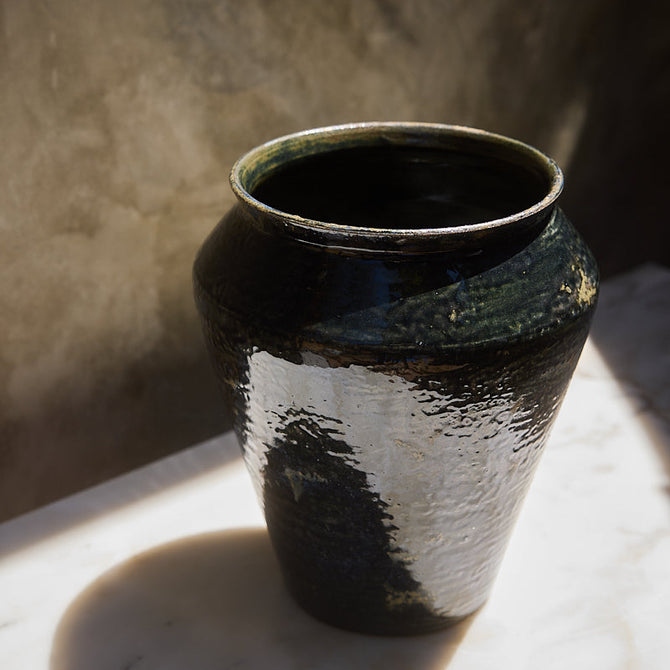
{"dataProduct":{"id":"gid://shopify/Product/8806263914748","title":"Midnight Vessel - Zeina Nahas","currencyCode":"CAD","amountMax":"175.0","amountMin":"175.0","price":"175.00","compareAtPrice":null,"imagesUrl":"https://cdn.shopify.com/s/files/1/0625/9215/5900/files/Mararamiro_ZeinaNahas_Vessel-1-2.jpg?v=1729799393&width=600","urlStore":"https://www.mararamiro.com/products/midnight-vessel-zeina-nahas","altImage":"Midnight Vessel - Zeina Nahas - Mararamiro"},"isHidePrice":true,"isHideVariant":true,"isHideDescription":true,"labelButton":"Buy now","ATCLabelButton":"Add to cart","locale":"CA","colorTitleProduct":{"hue":0,"saturation":0,"brightness":0},"colorBNButton":{"hue":0,"saturation":0,"brightness":1},"colorATCButton":{"hue":0,"saturation":0,"brightness":0,"alpha":1},"colorBNText":{"hue":0,"saturation":0,"brightness":0},"colorPrice":{"hue":0,"saturation":0,"brightness":0},"colorATCText":{"hue":0,"saturation":0,"brightness":1},"ATCClickButton":"ATC","clickButton":"buyNow","cssContent":"","linkBuyNowCustom":"","language":"en","id":"Avada-Tool_ProductDetail-2","hidden":false,"locked":false,"blockName":"Product details"}
Lisa: I love that it’s hand-formed, with imperfections that feel intentional and beautiful. The dark glaze is moody yet calming – it lives between function and sculpture. It has a quiet presence that blends into an environment so well.
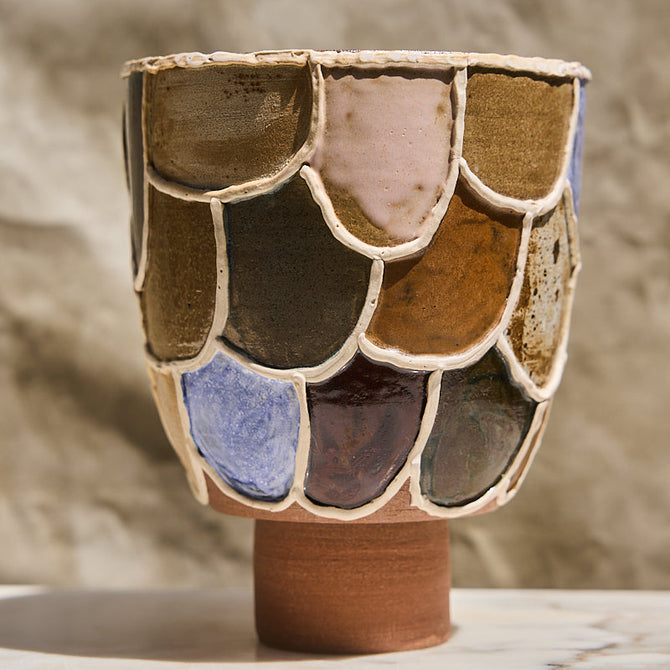
{"dataProduct":{"id":"gid://shopify/Product/8806891815164","title":"Midnight Tea Bowl No.1 - Zeina Nahas","currencyCode":"CAD","amountMax":"45.0","amountMin":"45.0","price":"45.00","compareAtPrice":null,"imagesUrl":"https://cdn.shopify.com/s/files/1/0625/9215/5900/files/Mararamiro_ZeinaNahas_Midnight_TeaBowls-05.jpg?v=1729886294&width=600","urlStore":"https://www.mararamiro.com/products/midnight-tea-bowl-no-1-zeina-nahas","altImage":"Midnight Tea Bowl No.1 - Zeina Nahas - Mararamiro"},"isHidePrice":true,"isHideVariant":true,"isHideDescription":true,"labelButton":"Buy now","ATCLabelButton":"Add to cart","locale":"CA","colorTitleProduct":{"brightness":0,"saturation":0,"hue":0},"colorBNButton":{"saturation":0,"hue":0,"brightness":1},"colorATCButton":{"saturation":0,"hue":0,"alpha":1,"brightness":0},"colorBNText":{"brightness":0,"saturation":0,"hue":0},"colorPrice":{"brightness":0,"hue":0,"saturation":0},"colorATCText":{"brightness":1,"saturation":0,"hue":0},"ATCClickButton":"ATC","clickButton":"buyNow","cssContent":"","linkBuyNowCustom":"","language":"en","id":"Avada-Tool_ProductDetail-3","type":"productDetails","componentId":"productDetails-iqvy5FScKpsf","componentName":"Product","createdAt":"2026-01-08T20:26:12.452Z","updatedAt":"2026-01-08T20:26:12.452Z","hidden":false,"locked":false,"blockName":"Product details"}
Lisa: They feel like everyday pieces with real soul. I’m drawn to their hand-formed, organic shapes, which make the set feel cohesive while letting each bowl stand on its own. They bring intention to a simple tea ritual and double as small sculptural accents in a space.
{"dataProduct":{"id":"gid://shopify/Product/8314852147452","title":"Earth Bamboo Rug - Cashmere","currencyCode":"CAD","amountMax":"5750.0","amountMin":"1190.0","price":"1190.00","compareAtPrice":null,"imagesUrl":"https://cdn.shopify.com/s/files/1/0625/9215/5900/files/EarthBamboo_Cashmere_10.jpg?v=1709331529&width=600","urlStore":"https://www.mararamiro.com/products/earth-bamboo-rug-cashmere","altImage":"Earth Bamboo Rug - Cashmere - Mararamiro"},"isHidePrice":true,"isHideVariant":false,"isHideDescription":true,"labelButton":"Buy now","ATCLabelButton":"Add to cart","locale":"CA","colorTitleProduct":{"brightness":0,"saturation":0,"hue":0},"colorBNButton":{"saturation":0,"hue":0,"brightness":1},"colorATCButton":{"saturation":0,"hue":0,"alpha":1,"brightness":0},"colorBNText":{"brightness":0,"saturation":0,"hue":0},"colorPrice":{"brightness":0,"hue":0,"saturation":0},"colorATCText":{"brightness":1,"saturation":0,"hue":0},"ATCClickButton":"ATC","clickButton":"buyNow","cssContent":"","linkBuyNowCustom":"","language":"en","id":"Avada-Tool_ProductDetail-4","type":"productDetails","componentId":"productDetails-iqvy5FScKpsf","componentName":"Product","createdAt":"2026-01-08T20:26:12.452Z","updatedAt":"2026-01-08T20:26:12.452Z","hidden":false,"locked":false,"blockName":"Product details"}
Lisa: This rug feels quietly luxurious while still being made for everyday living. I haven’t experienced it in person, but from its bamboo and New Zealand wool blend, I imagine it has that soft, subtle sheen and plush texture while holding up well over time. The Cashmere tone also feels calm, warm, and grounding, so it would add comfort and intention to a space without overpowering it.
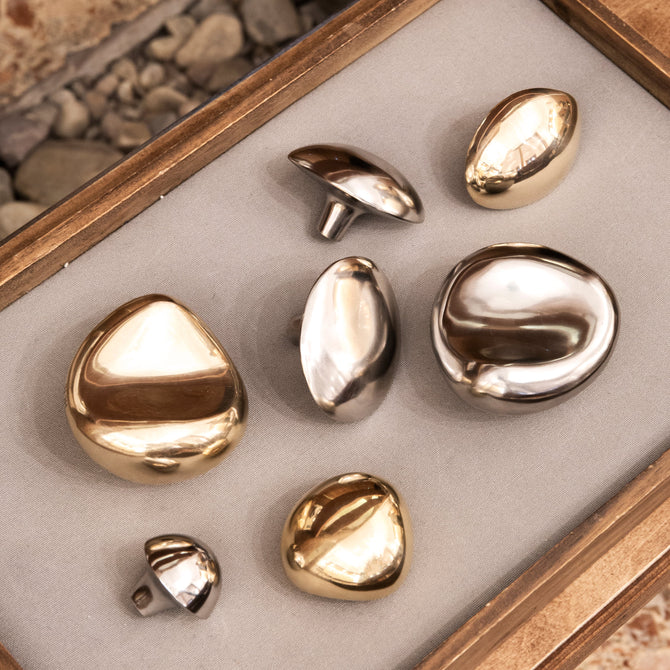
{"dataProduct":{"id":"gid://shopify/Product/8743777829116","title":"MOMI Knob/Hook Short Mini","currencyCode":"CAD","amountMax":"165.0","amountMin":"165.0","price":"165.00","compareAtPrice":null,"imagesUrl":"https://cdn.shopify.com/s/files/1/0625/9215/5900/files/Mararamiro_MOMIKNOB_HOOKLONGMINI-18.jpg?v=1724981745&width=600","urlStore":"https://www.mararamiro.com/products/momi-knob-hook-short-mini","altImage":"MOMI Knob/Hook Short Mini - Mararamiro"},"isHidePrice":true,"isHideVariant":false,"isHideDescription":true,"labelButton":"Buy now","ATCLabelButton":"Add to cart","locale":"CA","colorTitleProduct":{"brightness":0,"saturation":0,"hue":0},"colorBNButton":{"saturation":0,"hue":0,"brightness":1},"colorATCButton":{"saturation":0,"hue":0,"alpha":1,"brightness":0},"colorBNText":{"brightness":0,"saturation":0,"hue":0},"colorPrice":{"brightness":0,"hue":0,"saturation":0},"colorATCText":{"brightness":1,"saturation":0,"hue":0},"ATCClickButton":"ATC","clickButton":"buyNow","cssContent":"","linkBuyNowCustom":"","language":"en","id":"Avada-Tool_ProductDetail-5","type":"productDetails","componentId":"productDetails-iqvy5FScKpsf","componentName":"Product","createdAt":"2026-01-08T20:26:12.452Z","updatedAt":"2026-01-08T20:26:12.452Z","hidden":false,"locked":false,"blockName":"Product details"}
Lisa: I love how these knobs bring a consistent, softly organic design language to the smallest details in a home. The form and polished cast-metal finish feel like architectural jewelry, and I appreciate that the same piece can shift seamlessly between knob and hook without losing its visual integrity.
Quick-Fire
A few quick questions to close, small glimpses into Lisa’s everyday inspirations and rituals.
Tanya: Favourite material or texture to work with?
Lisa: Glass.
Tanya: The object you reach for everyday?
Lisa: My wedding ring.
Tanya: What time of day feels most creative to you?
Lisa: 7-8am
Tanya: The most unexpected item in your home?
Lisa: Probably the most unexpected thing is what’s missing. I don’t have any art on my walls, which I think would surprise most people.
Tanya: Favourite scent, flower, or flavour?
Lisa: My scent cravings change, but right now it’s all about Rose
At its heart, Lisa’s approach is about care — for place, for people, and for the quiet details that make a space feel meaningful over time. Lune 1860 is not static; it evolves through collaboration, use, and presence, much like the homes we build for ourselves. It’s a reminder that the most resonant spaces are those shaped with intention, patience, and an openness to change.


